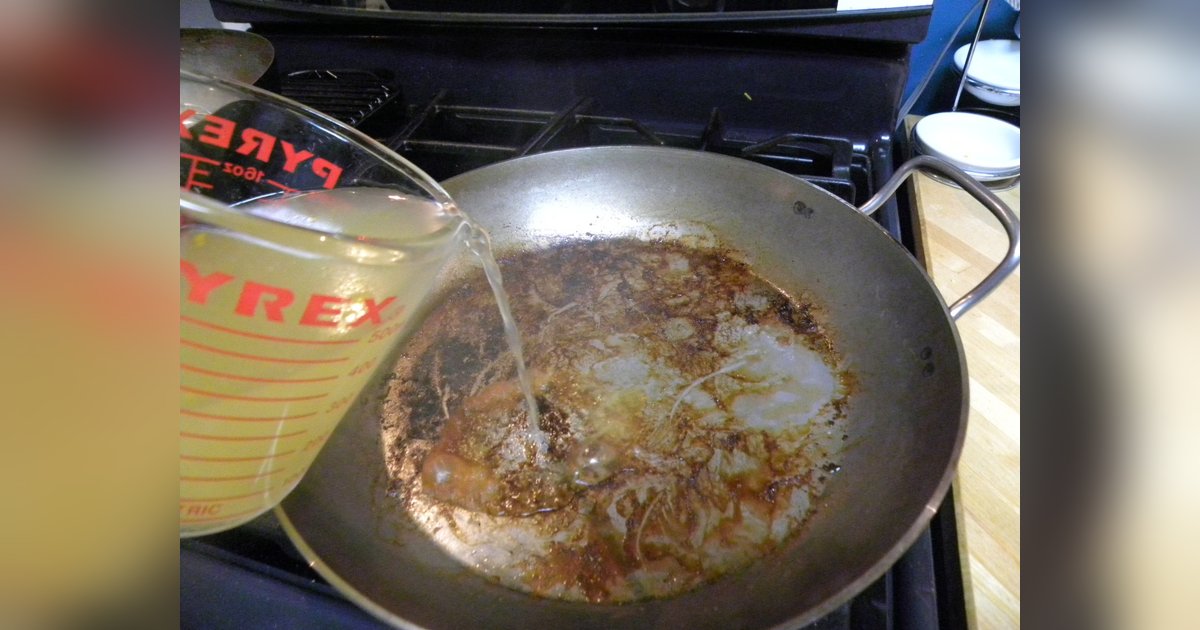
After you sear a piece of meat or fish, the pan looks messy: brown, sticky patches clinging to the bottom. Many cooks scrub that away. Experienced cooks see flavor. A pan sauce turns those browned bits into a glossy, savory sauce in about five minutes, and it requires almost no extra ingredients.
Why It Works
Those brown bits are called fond, the French word for base. They form when proteins and sugars caramelize on hot metal, producing deep flavor. When you add liquid to the hot pan and scrape, the fond dissolves into it, and the sauce takes on that roasted character. The technique is known as deglazing, and it is the foundation of countless classic sauces.
The pan matters. Stainless steel or cast iron builds good fond. A nonstick pan produces little, so the sauce will taste thinner.
The Basic Formula
Think of a pan sauce as five steps you can remember without a recipe.
- Sear your protein, then remove it to a plate to rest.
- Pour off excess fat, leaving about a tablespoon.
- Cook minced shallot or garlic in the fat for thirty seconds.
- Add liquid and scrape up the fond until the pan is clean.
- Reduce, then finish with butter and something sharp.
Resting meat on the plate while you make the sauce also lets juices redistribute, so the timing works in your favor.
Choose Your Liquid
Stock is the usual workhorse, and a half cup is enough for two servings. White wine, dry vermouth or apple cider add acidity and sweetness for a livelier sauce. If you avoid alcohol, use extra stock with a spoonful of vinegar or lemon juice. Use unsalted or low-sodium stock, because reducing concentrates salt and can make the sauce too salty.
Bring the liquid to a boil over medium-high heat and keep scraping. Let it bubble until it has reduced by about half and looks slightly syrupy. This takes two or three minutes.
Finish With Fat and Acid
Turn off the heat or lower it. Swirl in a tablespoon or two of cold butter, one small piece at a time. The cold butter emulsifies into the liquid, giving the sauce body and shine. Add any resting juices from the plate. Then add brightness: a squeeze of lemon, a splash of vinegar, or a spoonful of mustard.
Taste and adjust. If it is flat, it probably needs a pinch of salt or a few drops of acid. If it is too sharp, add a little more butter or a pinch of sugar.
Easy Variations
The basic method adapts to many flavors. For chicken, try shallot, stock, Dijon mustard and fresh thyme. For pork chops, use apple cider, a splash of cider vinegar and sage. For steak, cook minced shallot, deglaze with stock and add a spoonful of black peppercorns crushed lightly. For salmon, try a lemon, caper and parsley sauce.
Cream is an optional addition. A few tablespoons reduced with the stock makes a richer sauce, ideal with mushrooms or chicken. Herbs go in last, because heat dulls them.
Common Pan Sauce Mistakes
The most common error is burning the fond. If the brown bits are black and bitter, wipe the pan and start with fresh oil. Keep the heat at medium. Another mistake is skipping the reduction. A watery pan sauce tastes thin, while a reduced one clings to the food. Finally, do not boil the sauce hard after adding butter, since it can separate into greasy puddles.
Once you master this method, you will start looking at every skillet differently. A pan sauce turns an ordinary chicken breast into a proper dinner, and it takes less time than setting the table.
Practice makes it faster. The first time you make a pan sauce, read the steps and gather everything first: stock, shallot, butter and lemon within reach. By the third attempt you will do it by feel, adjusting the liquid to the amount of fond and the reduction to the thickness you like. It is one of the highest-return techniques a home cook can learn, because it needs no special equipment and works with chicken, pork, fish or even seared mushrooms.
For more background, see the Wikipedia article.