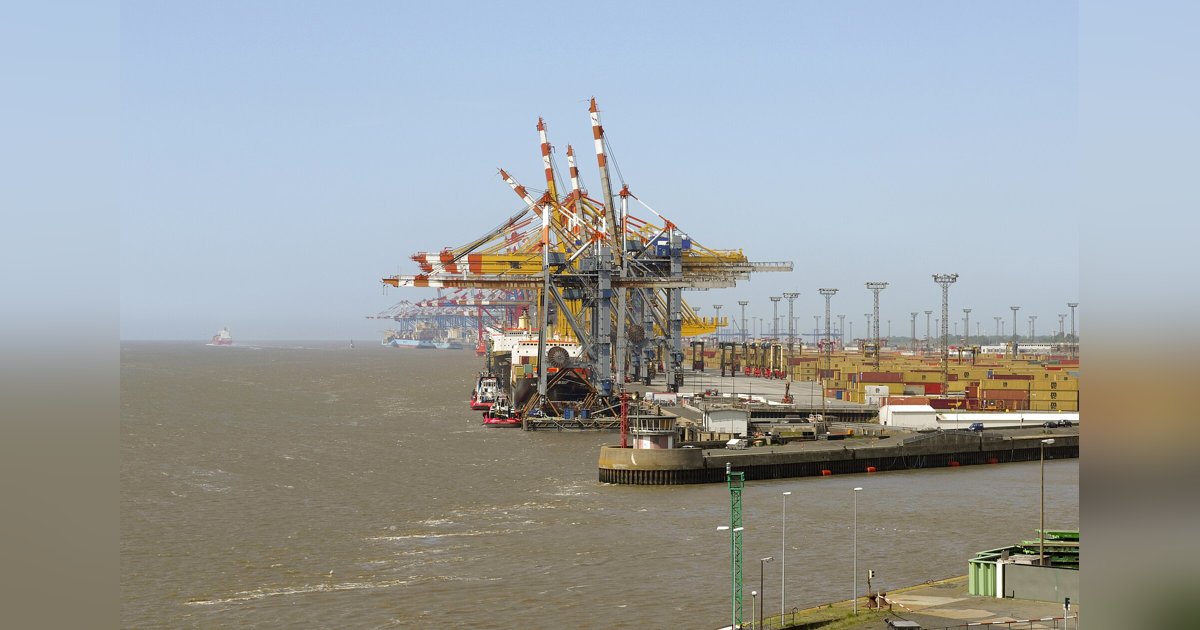
A supply chain is the full path a product travels from the ground, farm or factory to the person who finally uses it. The word chain suggests a tidy line. In practice it is a sprawling web of suppliers, ports, trucks, warehouses and software, and its shape explains why a delay in one corner of the world can leave a shelf empty somewhere else.
Follow one ordinary product
Take a cotton T-shirt. The cotton is grown on a farm, baled, and sold to a spinning mill. The mill makes yarn, which goes to a fabric maker. Dyes and chemicals arrive from other suppliers. A garment factory cuts and sews the fabric, adding thread, buttons and labels sourced elsewhere. The finished shirts are packed, trucked to a port, loaded onto a ship, unloaded, cleared through customs, moved to a distribution center, and finally delivered to a store or a front door.
Each of those steps has its own owners, schedules and risks. Few companies control more than a handful of them. That is why the phrase supply chain often hides dozens of separate businesses.
Tiers, and why you cannot see them all
Manufacturers talk about tiers. A tier one supplier sells directly to the brand. A tier two supplier sells to the tier one, and so on down. A car maker may know its tier one parts firms well, yet have little idea who makes the tiny chip inside a sensor three levels down.
This blind spot became obvious in recent years, when shortages of one inexpensive component stalled the assembly of expensive finished goods. The cost of the missing part was small. The cost of the idle factory was enormous.
Just in time, and its trade-offs
For decades, many firms embraced just-in-time delivery. Instead of storing large stockpiles, they ordered parts to arrive close to when they were needed. This cut warehouse costs, reduced waste, and freed up cash. It also removed the cushion.
- Efficiency: Less inventory means less money tied up and fewer unsold goods.
- Fragility: With no buffer, a missed shipment halts production within days.
- Speed of spread: A problem at one supplier moves quickly down every tier below it.
Some companies now keep extra stock of critical items, a strategy sometimes called just in case. It costs more in normal times and saves a great deal in bad ones.
Where a supply chain is most likely to snap
Disruptions tend to cluster at a few kinds of choke points.
- Single sources: If only one factory makes a part, any fire, flood or strike there affects everyone.
- Narrow waterways and ports: A large share of world trade passes through a limited number of straits, canals and harbors. A blockage or congestion has outsized effects.
- Labor and transport capacity: A shortage of truck drivers, rail slots or warehouse workers can strand goods that already exist.
- Weather and disasters: Droughts lower river levels, storms close ports, and heat waves slow outdoor work.
- Policy changes: Tariffs, export limits and new customs paperwork can reroute trade overnight.
The bullwhip effect
Economists describe a pattern called the bullwhip effect. A small change in consumer demand makes retailers over-order a little, wholesalers over-order a little more, and manufacturers swing hard in response. By the time the signal reaches the raw material supplier, a modest shift has become a wild swing. When shoppers panic-buy a product, the effect can leave warehouses full months later, after demand has settled.
Better data sharing between partners helps dampen the swing, which is one reason modern logistics relies so heavily on tracking software and forecasting tools.
Making the system sturdier
Firms are not helpless. Common responses include spreading orders across several suppliers, moving production closer to customers, holding more safety stock, and mapping suppliers deeper than tier one. Governments are paying attention too, particularly for goods seen as strategic, such as medical supplies and semiconductors.
None of this is free, and none of it removes risk entirely. A more resilient supply chain usually costs more per unit, and consumers notice that in prices. The practical lesson for readers is modest but useful: when a product is late or scarce, the cause is rarely a single villain. It is usually a long, thin chain with one weak link, stretched across many countries and many hands.
For more background, see the Wikipedia article.